Aging is a biological process that happens everywhere in the body, but is particularly visible in the face. If you have noticed that your cheeks have lost their youthful volume or have started to sag, one option that is available to you is cheek fillers. These injectables restore lost volume in the midface with a supportive gel placed along the cheekbones and temples. At Mimi Lee M.D. PA, we use injectables to give our patients in Little Rock, AR, a nonsurgical option for facial volumizing and contouring.
Why Are My Cheeks Showing Age First?
The cheeks contain small pockets of fat called fat pads that sit above the cheekbone. These are what give the cheeks their round, full shape. As we age, these fat pads start to shrink and drift downward, which flattens the upper cheek and adds weight to the lower face. Bone in the midface also loses some of its shape and removes the support that keeps the cheeks lifted. With all of these changes, the cheeks can start to look tired or hollow, even before signs of aging appear elsewhere.
What Cheek Filler Injections Restore
Cheek fillers replace volume where fat and bone support have diminished. The cheek and temple filler formulas Dr. Lee uses are made from hyaluronic acid, a sugar molecule your body produces that helps bind water and keep its shape under the skin. When placed at the right depth in the cheek area, the gel lifts the cheek and adds more projection along the cheekbone to rebuild some of the lost structure.
Signs You May Be a Good Candidate for Cheek Fillers
Flattened or Sunken Cheeks
When the upper cheek loses its rounded shape, the face can begin to look flatter. Fat pads can also deflate or descend toward the jaw, displacing the volume to a lower area while the cheeks lose their shape.
Hollow or Sunken Temples
The temples at the side of the forehead also lose volume with age, and lost volume in this area can make the face look more hollow as the bone structure underneath becomes more visible. A small amount of filler in this area can make a big difference in the shape of the face and how youthful it looks.
Volume Loss From Weight Changes
Rapid weight loss can deflate the cheeks just as much as aging, and sometimes more quickly, due to the fact that weight is lost in the face as well as the body during any weight management program. Filler can be used during this process to help keep the face looking youthful while weight loss takes place across the body.
Benefits of Cheek Fillers Beyond Added Volume
- No Surgery Required: Cheek volume returns through a series of small injections rather than incisions, so there is no general anesthesia and no surgical recovery.
- Results Appear Immediately: Added contour and lift are visible the moment treatment ends, though the filler keeps settling over the following weeks.
- Volume That Holds Its Shape: Denser fillers such as JUVÉDERM® VOLUMA® maintain structure in the cheeks and temples for up to two years before gradually breaking down.
- A Look Built Around Your Face: Dr. Lee adjusts product choice and placement to your bone structure and skin quality.
- Pairs Well With Other Treatments: Cheek filler often works alongside Botox® and Dysport® or lip filler to balance results across the whole face.
Why We Choose JUVÉDERM VOLUMA for Cheek and Temple Volume
JUVÉDERM VOLUMA is a thick, cohesive filler in the JUVÉDERM collection that is made for the cheeks and temples. It is built with VYCROSS® technology, which is a manufacturing process that bonds different sizes of hyaluronic acid particles into a gel that is more stable and resists breaking down too easily.
This results in a dense product that sits deep against the cheekbone and provides lift when lighter fillers would spread too easily for the area. VOLUMA also contains lidocaine to reduce discomfort during injection. If patients have thin or aging skin, this injectable also provides structure while still allowing the skin to move naturally and with expression.
What Happens During a Cheek Filler Appointment
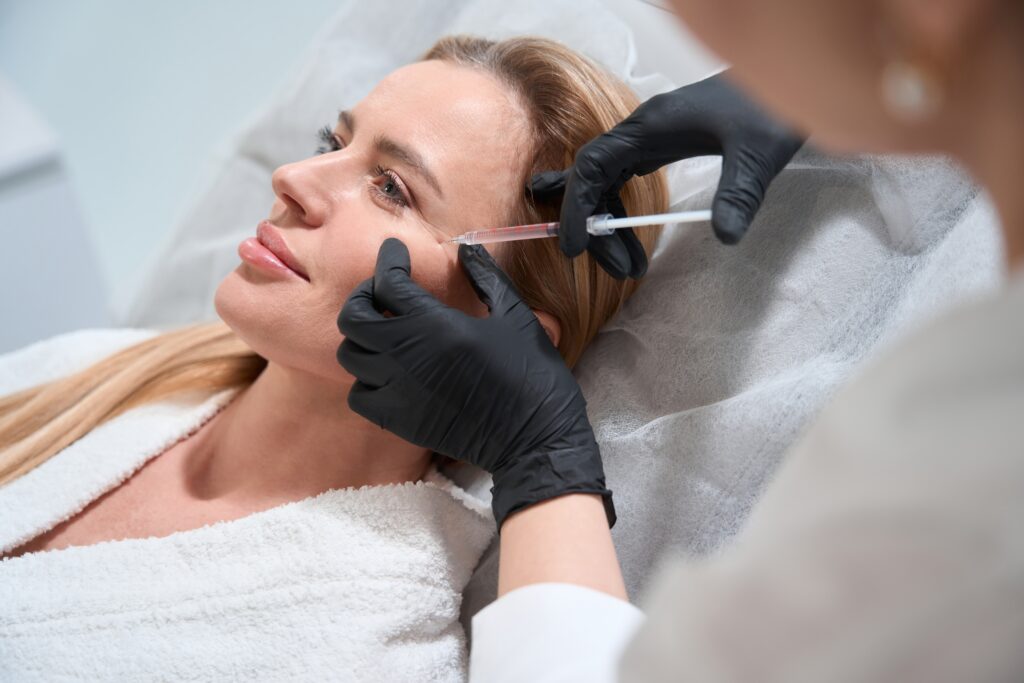
Consultations for fillers are important so that Dr. Lee can look at your medical history and facial shape and make sure cheek fillers will provide the results you are looking for. If you are a good candidate, she will cleanse the skin and mark the injection points, always applying a numbing cream to the skin to prevent any discomfort during the process. Dr. Lee uses a fine needle when placing filler in the cheeks and temples. Appointments are 60 minutes or less.
Your Recovery Timeline After Cheek Fillers
We use a few techniques to make recovery as easy as possible after cheek fillers. We will have you start taking Arnicare, a homeopathic remedy for bruising, two days before injections and several days afterward to help your body recover from injections. You will also apply ice to the area after treatment to help control any swelling. Volume changes happen right away, but the filler will gradually integrate over two to four weeks, at which point you will be able to see your full results.
How Long Cheek Fillers Last
Hyaluronic acid cheek fillers last 12 to 24 months. Your exact timeline will depend on which product we use and how your body responds to the gel. You can expect denser formulas like VOLUMA to hold their shape longer than soft fillers placed in high-movement areas like the lips. While hyaluronic acid fillers have been shown to provide consistent improvement in appearance and patient satisfaction in studies, individual results always vary based on skin quality and lifestyle.
Schedule Your Cheek Filler Consultation in Little Rock, AR
Mimi Lee M.D. PA treats cheek and volume loss in Little Rock, AR, personalizing each plan to your facial structure. To find out whether cheek fillers suit your goals, call 501-224-0880 or contact the office to schedule your consultation.