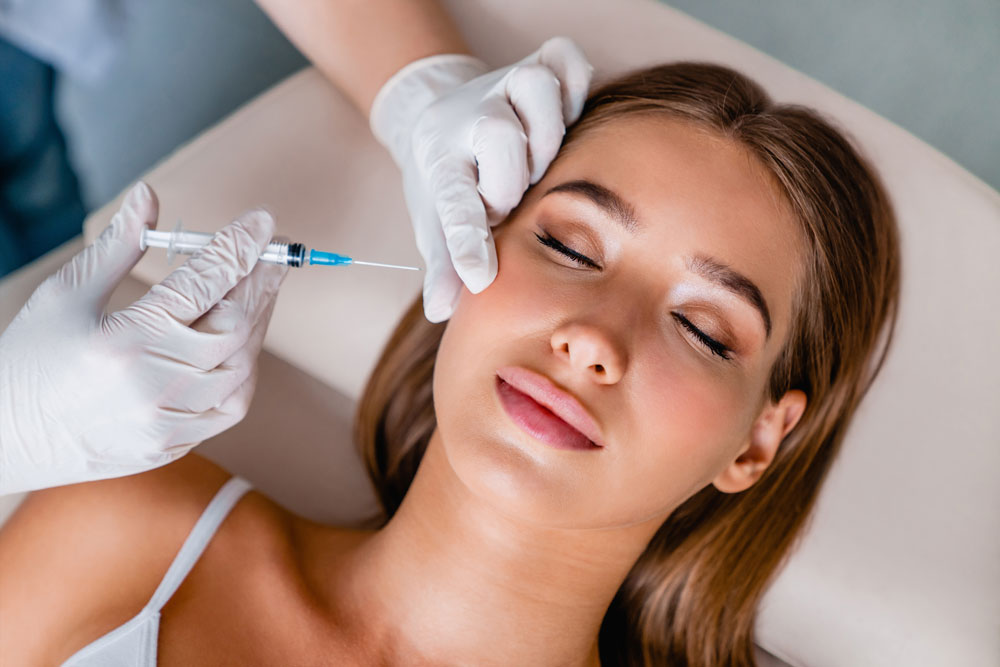
Injectable treatments are beneficial options for those who aren’t interested in invasive methods, but want a little boost for signs of aging. Each injectable is made for different concerns, which is why having multiple options matters. Mimi Lee M.D. PA provides injectables for patients in Little Rock who want changes that still feel authentic and allow them to express themselves normally. Dr. Lee offers Botox, Dysport, Letybo® and a range of dermal fillers for a fully customizable treatment plan.
Neuromodulators vs Dermal Fillers: What Is the Difference?
Injectable fillers fall into two basic categories based on how they work and what they treat. Neuromodulators are used for facial movement, while dermal fillers provide volume and structure. The choice will depend on the type of wrinkles that you have and how you want to treat them. Neuromodulators are best for wrinkles that are visible only when making facial expressions. Dermal fillers are best for wrinkles that are always present or for areas where you want more volume, like the lips.
Neuromodulators
What Are Neuromodulators?
These medications work by blocking the release of a chemical that enables the muscles to contract, decreasing lines on your forehead, at the corners of your eyes, between your brows and more. Using a tiny needle, Dr. Lee injects the medication into the muscle tissue surrounding the wrinkle. After several days, the formula reduces muscle movement, and the areas that wrinkled before stay smooth. The entire procedure takes about 10 minutes, and there is no downtime afterwards.
How Do Neuromodulators Treat Wrinkles?
Neuromodulators are made from a substance called Botulinum toxin type A that interacts with the communication between nerve endings and muscles. Usually, nerves release a messenger chemical that tells the muscle fibers to contract. The injectable interferes with this signal, but only in the area that was injected. The surrounding nerves and muscles continue to function normally, and the treated nerve endings gradually regain their ability to send signals.
Types of Neuromodulators
Botox
This neuromodulator has been used in the U.S. for more than 20 years. Because of this, it has a predictable onset and diffusion pattern and is widely trusted by patients looking for a wrinkle treatment. It is also approved for many treatment areas and applications and is used for everything from frown lines to neck bands.
Dysport
Dysport is known for its slightly quicker onset and wider diffusion once injected. Diffusion means that it can spread out more from the injection point, easily treating broader areas while still being able to provide subtle results. It can be good for those who prefer fewer injection points or faster results.
Letybo
Letybo is a newer option in the U.S., but has been widely used in other parts of the globe for years. This product can give some patients a smoother look that they prefer, and it can also be a good option for patients who are worried about developing resistance to Botox with long-term use, since it is formulated without accessory proteins.
Treatment Areas for Neuromodulators
Crow’s feet
These fine lines extend outward from the corners of the eyes and become more noticeable when you smile. This area involves delicate skin and frequent expression, so we place neuromodulators carefully to reduce wrinkles without impacting your natural smile.
Forehead Lines
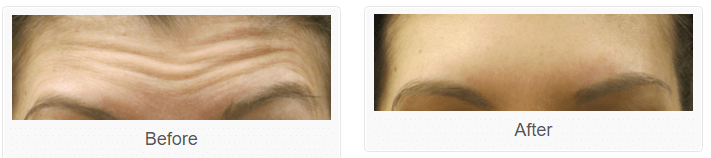
Horizontal forehead lines form from repeated eyebrow movement and often become more noticeable with age. This area typically requires a balanced approach so the brow remains expressive but not overly active. When dosed properly, neuromodulators can smooth the forehead while maintaining natural brow positioning.
Frown Lines
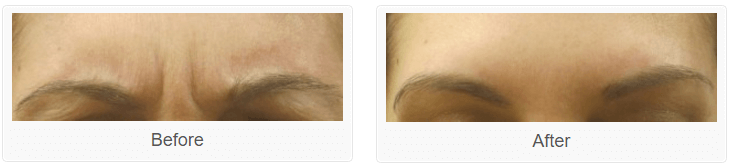
Also called “11s,” these vertical lines between the eyebrows are caused by frequent contraction of the corrugator and procerus muscles. Treating this area can help soften the appearance of tension or fatigue in the upper face. This is one of the most commonly treated zones with neuromodulators, especially for patients looking for a refreshed appearance.
Bunny Lines
These are the fine diagonal lines that appear on either side of the nose when you scrunch your face or laugh. While not always bothersome, some patients choose to treat this area. A small amount of product is usually enough to reduce movement in the nasal muscles responsible for these lines.
Platysma Bands
Vertical neck bands can become more visible with age because of repeated contraction of the platysma muscle. In some cases, treating this area with neuromodulators can help reduce the pulling effect these bands have on the lower face and jawline. While the effect is subtle, it can give you a smoother neckline.
Lip Flip
The lip flip is a technique that uses neuromodulator injections near the upper lip to relax the muscle just above it. This allows the lip to gently roll outward, which can give the appearance of a fuller upper lip without adding volume. It’s often used as a subtle enhancement or as an alternative to filler.
Before and After Neuromodulators

What Are Dermal Fillers?
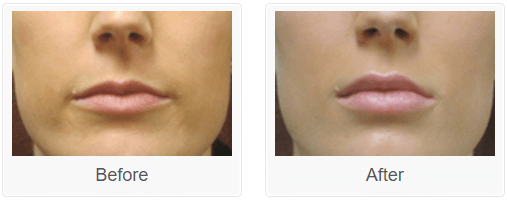
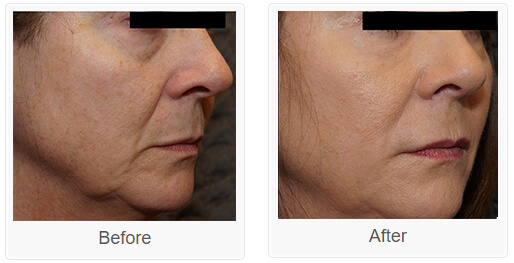
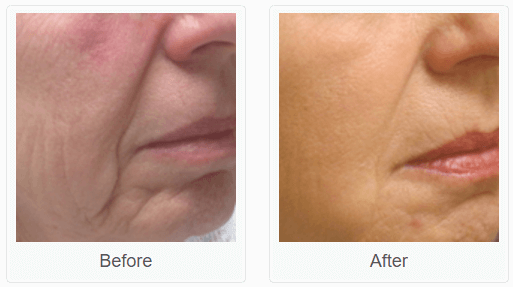
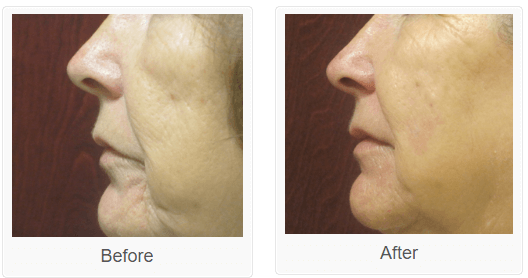
Dermal fillers can be used to lift and smooth wrinkles and deep grooves in the skin. The applications require minimal to no downtime. Dermal fillers are effective for:
- Smoothing wrinkles and folds alongside the nose, mouth and chin.
- Straightening the depressed lip corners that can cause a sad look.
- Adding volume to lost facial contours and thinning lips.
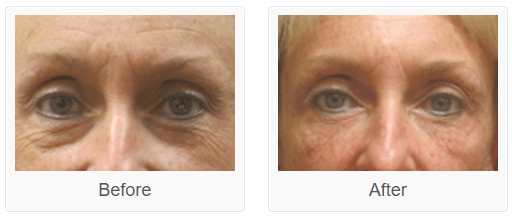
- Reversing signs of aging from soft tissue volume loss and bone loss under the eyes and at the cheeks.
Dermal fillers can also be used in other places not listed here. Dr. Lee can address these areas in your personalized consult.
What Dermal Fillers Treat
- Cheeks: Adding filler to the cheeks can provide structural support and improve contour in the midface. Fillers used here are typically firmer and placed deeper for lift and support.
- Temples: Hollowing at the temples can create a recessed appearance at the outer edges of the forehead. In this area, fillers are used to support soft tissue along the side of the face.
- Tear Troughs: This area refers to the space between the lower eyelid and the upper cheek, where some patients experience shadowing or hollowing. A precise application of under-eye filler can help this area to look smooth and youthful.
- Marionette Lines and Nasolabial Folds: Folds that run from the corners of the nose down toward the mouth (nasolabial folds) or from the corners of the mouth downward (marionette lines) may become more noticeable once volume in the lower face decreases. In many cases, filler can be used to support the tissue around these areas.
- Chin and Jawline: Fillers placed in the chin or along the jawline can help define angles, support soft tissue, or improve symmetry between the right and left sides. Firmer fillers are generally selected for these areas to maintain shape and mimic bone.
- Lips: The lips can be treated for volume, symmetry, shape or definition, depending on what concerns are present. Different filler consistencies may be chosen based on whether the goal is subtle hydration or visible volume.
Types of Dermal Fillers
JUVÉDERM®
JUVÉDERM is a widely used filler family made with hyaluronic acid, a naturally occurring substance that helps retain moisture and volume in the skin. JUVÉDERM products have VYCROSS® technology, a cross-linking process that blends different molecular weights of hyaluronic acid for a smooth, long-lasting gel. Each product in the line has its own consistency and purpose.
- JUVÉDERM VOLUX XC: Used for chin and jawline enhancement
- JUVÉDERM VOLUMA XC: Adds volume to the midface and cheeks
- JUVÉDERM ULTRA PLUS XC: Designed for deeper lines and folds around the mouth
- JUVÉDERM VOLBELLA XC: Softens perioral lines and smoothes tear troughs
- JUVÉDERM VOLLURE XC: Treats moderate facial folds like nasolabial creases, and can be used for undereye rejuvenation
RADIESSE®
RADIESSE is a biostimulatory injectable that has a different mechanism of action than hyaluronic acid-based cosmetic fillers. It is made of calcium hydroxylapatite (CaHA) microspheres dispersed within a smooth gel matrix that provides structural support right away while also encouraging gradual collagen development beneath the skin. The gel is metabolized by the body, while the CaHA microspheres create a framework within the tissue that supports new collagen formation. Because it adds structure right away and promotes long-term collagen production, RADIESSE is suited for areas that could benefit from improved support and density.
Restylane®
Restylane is another family of facial fillers formulated with hyaluronic acid. Restylane has a different gel structure from other similar fillers. Products from this line feature two technologies: NASHA® Technology, for areas that need more lift and a firmer feel, and XpresHAn Technology™, for areas that need movement.
- Restylane Defyne: Enhances moderate-to-deep smile lines and provides chin projection
- Restylane Lyft: Adds lift and structure to the midface and jawline
- Restylane Refyne: Softens mild-to-moderate laugh lines with flexible support for facial movement
- Restylane Contour: Used for fine lines on the lower face
- Restylane Eyelight: Addresses volume loss in the under-eye area
- Restylane-L: Used for facial lines, lips and deep tear troughs.
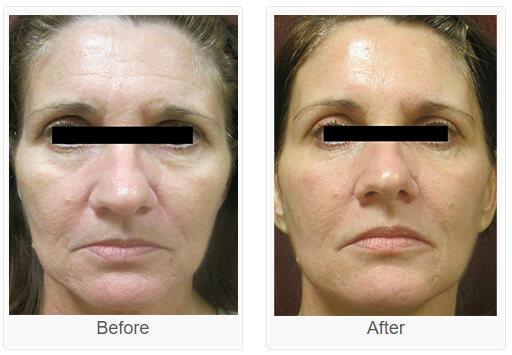
Before and After Dermal Fillers
How to Choose the Right Product for Your Concerns
Neuromodulators work best when expression lines are due to muscle activity, such as between the brows, across the forehead, or around the eyes. In these areas, relaxing the underlying muscle is more effective than adding volume. For static lines or volume loss, fillers are the better option. Product selection also depends on the thickness of the skin, the depth of the wrinkle or hollow and how much movement occurs in the area. Thinner fillers may be used in the tear trough or lips, while firmer ones are chosen for the cheeks or chin. In some cases, combining both a neuromodulator and filler enhances results by softening muscle activity and supporting the skin above it.
What to Do Before Your Treatment
- Avoid taking aspirin, ibuprofen, or other blood-thinning medications unless medically necessary, as these may increase the risk of bruising.
- Discontinue supplements such as fish oil, ginkgo biloba and vitamin E for several days unless otherwise instructed.
- Do not consume alcohol 24 hours before your appointment.
- Take Arnicare tablets for two days before your treatment to minimize bruising.
- If you have an active infection, skin irritation, or recent dental work, your appointment may need to be rescheduled. Always inform us ahead of time.
What to Expect From Your Injectable Appointment
Consultation and Planning Your Treatment
Every injectable visit begins with a consultation so we can discuss all of your treatment options. We spend time looking at your muscle activity and volume loss and talking about the changes you have noticed to determine which products are appropriate.
During Your Treatment
We use numbing cream before all filler injections to keep you completely comfortable throughout the process. All fillers in our office also contain lidocaine, a local anesthetic that minimizes any sensation during treatment. We typically use a blunt-tipped cannula to place the filler so we can precisely place the material with minimal trauma to the surrounding tissue. In the cheeks or temples, we use a fine needle for deeper injection.
Neuromodulator treatments usually involve fewer injection points, though we take all of the same steps for your comfort. The process is efficient and depends on how many areas are being treated. Most appointments are under 30 minutes.
What to Do After Your Treatment
Continue taking your Arnicare Tablets for two days after your appointment or until bruising resolves. Ice can be applied to the treated area for one to two days to manage swelling. Avoid touching, rubbing or applying makeup or lotion to the treatment zone for the remainder of the day and night. It’s best to keep the area clean and allow the skin to settle.
Frequently Asked Questions About Injectable Fillers
How Long Do Neuromodulators Last?
The effects of neuromodulators such as Botox, Dysport, and Letybo begin within a few days and reach full effect at around two weeks. These results usually last three to four months, though some patients may notice a longer or shorter duration depending on factors like metabolism, muscle activity and dosage. With regular treatments, the muscles may respond more easily, which may extend the longevity between appointments.
How Long Do Dermal Fillers Last?
The duration of injectable fillers varies by product type. Some fillers may last around 6 to 9 months, while others used in the cheeks or jawline can remain effective for 12 to 18 months or longer.
Who Is a Good Candidate for Injectables?
Injectables are best for adults in good overall health who want to address facial muscle activity or volume loss. It’s also important that patients are free of active infections or skin irritation in the treatment area and are not pregnant or breastfeeding. We will help you determine which product or treatment best fits your situation.
Will I Look Overdone or Unnatural?
We take a conservative approach to dosing and placement, especially during your first visit. The goal is always to support your natural features, not alter them. Product selection, technique and understanding how the face moves are all at the center of our technique.
Why Choose Dr. Mimi Lee?
Dr. Mimi Lee is a board-certified surgeon with over 20 years of experience in facial injectables and microinjection techniques. She has personally administered more than 130,000 units of neuromodulators and thousands of syringes of filler. Dr. Lee has been named the “Face of Botox & Dermal Filler” and honored among Arkansas’s top non-surgical cosmetic professionals.
Explore Your Cosmetic Injectable Options in Little Rock, AR
Injectables can be a convenient, nonsurgical way to address volume loss, expression lines or facial imbalance. Mimi Lee M.D. PA, performs all injectable treatments personally for her patients in Little Rock, AR. To learn more or schedule an appointment, call 501-588-7824 or reach out through our website.